

God, Our Mother
Do your ‘old’ metaphors for God still serve you? You may not need to replace them—perhaps simply expand them. God doesn't change but we do, and sometimes our language must change too.

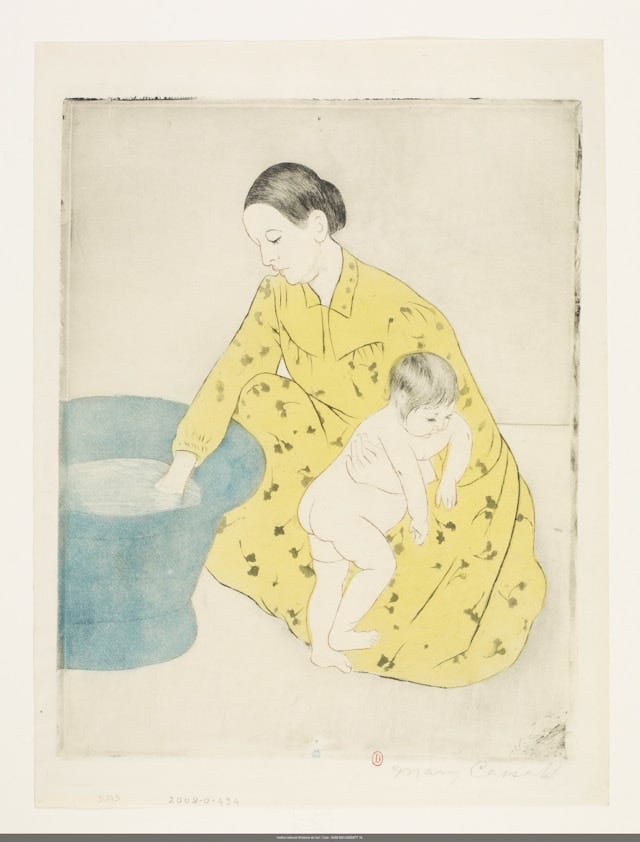
Dear Reader: This is a free post—please feel free to share it. If you’re reading by email, you may need to click over to ‘read in browser’ to see all the gorgeous artworks I’ve included in this piece. If you do, please consider hitting the ‘heart’ or leaving a comment to help this appear in more folks’ feeds.
Imaginative language to speak about God
“To speak about God is a dangerous venture. On the one hand, the Bible warns us that God is beyond our comprehension. As Elihu explains to Job, ‘Surely God is great, and we do not know him’ (Job 36:26a). Or David exclaims, ‘Great is the Lord, and greatly to be praised; his greatness is unsearchable’ (Ps. 145:3). . . Nevertheless, we have been created in God’s image as beings who are relational and have dominion or power over the earth (Gen. 1:26–28). We have been created with the ability to speak and to symbolize.”1 —Professor and minister Aída Besançon Spencer
Followers of God have always drawn on language from scripture and tradition to help us apprehend and articulate the divine. Because God is beyond comprehension, metaphor helps us conceptualize and describe God in ways we can grasp. We know the limitations of imagery. Jesus was a carpenter, not a shepherd. God is not literally a rock. Yet these metaphors endure because they connect us with important aspects of who God is and help us identify with emotions and ideas that would fall flat without them.
We call Jesus the “Lamb of God” to illustrate his sacrifice for us; or use “Rock of Ages” to describe God’s unchanging strength; or reference the “Light of the World” to encapsulate God’s hope and promises.
Metaphors are accurate to the extent they teach us what God is (and is not) like. Look at the astounding number of metaphors found in the book of Isaiah alone as compiled by professor Besançon Spencer:
Since God is Spirit, the Bible has a great variety of metaphors to describe God. Isaiah, for example, has many contrasting images standing side by side to bring out the paradoxically manifold nature of God: from the rejected parent, rejected lover, frustrated farmer, and vineyard owner with no yield, to the master farmer and builder, powerful feller of trees, and strong mother. God is described as a potter, seamstress, businessperson, judge, sweeper, ironsmith, washer, doctor, winemaker, and warrior.2 God is also described by nature: storms, thunder, earthquakes, great noises, tidal waves, whirlwinds, tempests, wildfires, rocky mountains, heat, shade, streams, dawn, darkness, and bright light.3 God can also be symbolized by animals, such as a lioness or a bird.4 All these metaphors and similes teach us that God is indeed majestic, just, righteous, and powerful, but also compassionate, patient, perceptive, and protective. These figurative terms certainly do not teach us that God is a father, mother, tempest, or bird. Metaphors are accurate only insofar as they are not stretched beyond their intentions. To what or to whom, then, will we compare God? God is like, and unlike, many images on earth.5

Willingness to stretch, be provoked, and consider
What are some of the metaphors you commonly use for God? Frequent crowd favorites tend to be terms such as: Lord, Savior, King, Father. But what if our vocabulary is too narrow?
• Are you willing to stretch your imagination as you consider how you relate to God?
• Are you willing to be provoked to examine how the metaphors we commonly use for God may or may not serve you in the season you’re in?
• And specifically, what might it mean for your every day life—especially during times of crisis (or the after-crisis liminality that often follows)—if God is not only our spiritual father, but also our mother?
Before going further, we must acknowledge that motherhood itself is complex. You may remember your mother fondly with profound gratitude and admiration, or you may have been deeply wounded or even traumatized. For many it’s a mixture of both. You may have experienced a complicated path to parenthood or you may have felt the burdensome weight of unwanted expectation from others about parenthood whether or not you desire to have children. When we’re honest about our own story, we can hold our gratitude, tenderness, grief, trauma, admiration, or ambivalence—all of it—and still engage with the mother-heart of God.
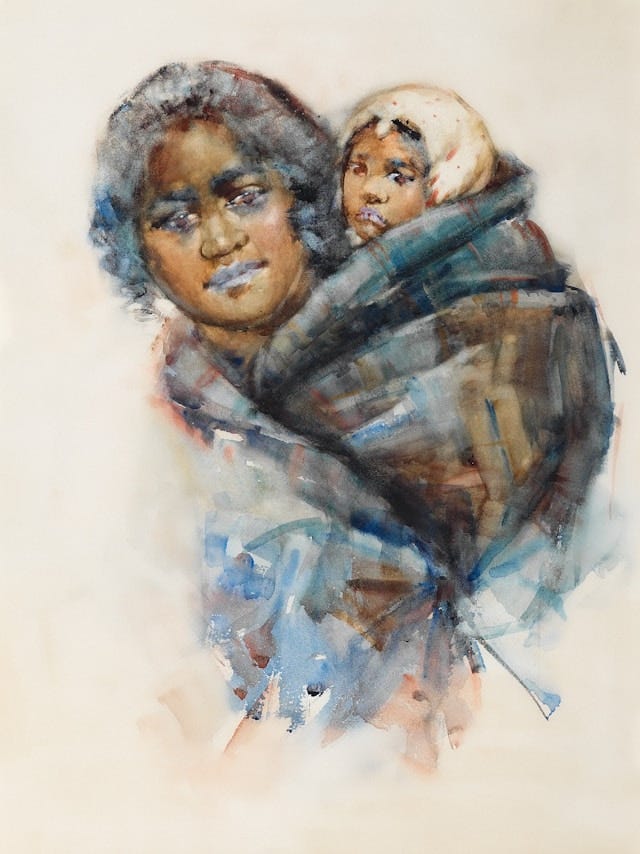
God is not gendered
As I invite you to explore the mother-heart of God metaphor and other feminine imagery for the divine, it’s important to state clearly from the outset: God is not gendered.
Genesis 1:27 says humankind was created in God’s image, male and female. Both conservative and progressive theologians affirm that God is not ontologically male or female unless you’re specifically referring to Jesus in his incarnate human form. Reformed tradition scholar R. K. McGregor Wright explains, God “is neither male nor female, nor a combination of both. Notions of a gendered God are intrinsic to a variety of paganisms, but are absent from a fully biblical Christianity.”6
To be clear, God is not male just as God is not female. While Jesus was born male, first and foremost he was human, revealing what God in human form is like. “The Bible linguistically and theologically highlights the importance of understanding Jesus first and primarily as human. That he was male is also true, but that fact should never be said to reflect God’s sexuality. Jesus’ maleness was a limitation imposed on the incarnate God,” says Besançon Spencer “not a reflection of God’s essence.”7
In other words, the humanity of Jesus was central to the incarnation, not his sex or gender. God’s desire is for women and men alike to see themselves wholly reflected in Christ.
Jesus did teach us to pray to “Our Father in heaven” (Matthew 6:9-13)—and this language matters. I will leave this to scholars to parse out why except to say that the names we call God not only describe God, but describe our understanding of and relationship to God. Aside from the times where God self disclosed as recorded in scripture, most of the names and metaphors we find in scripture arise from people trying to articulate and understand what God has been like in their lived experiences. These names reveal who God is and who we are in relation to God.
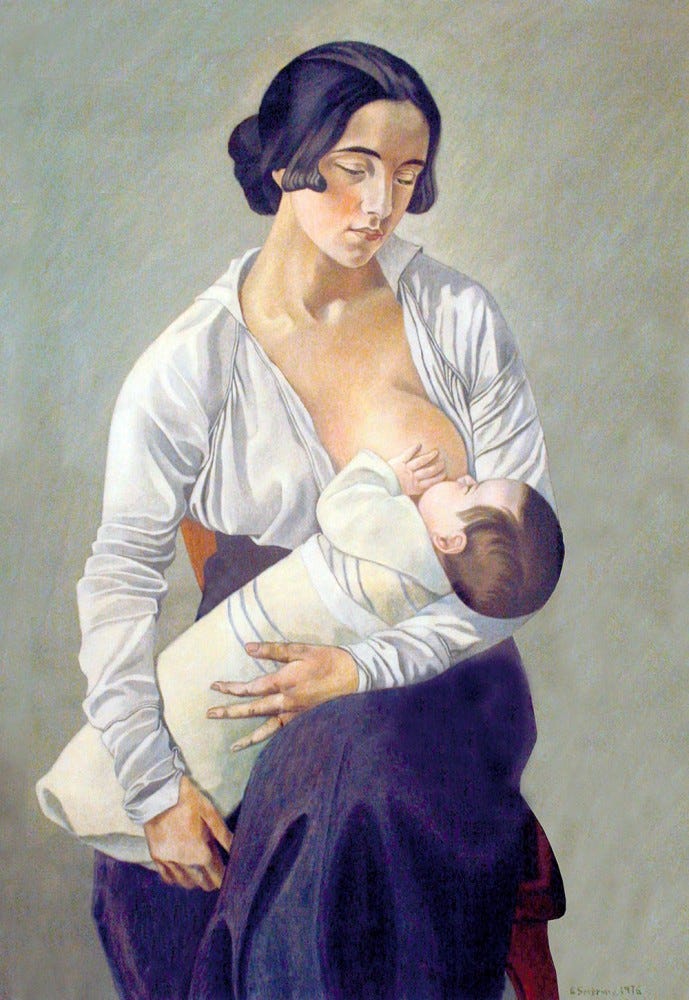
How we speak about God says something about ourselves
When my children were tiny, they called me Mama. This name was precious to me—new and full of meaning. As they grew, Mama became Mommy. Later still, Mum. Each name reflected a different stage of maturity, understanding, and relationship.
The same is true of how we name God. Throughout scripture, new names for God don’t replace old ones; they expand and articulate our understanding about who God is or what God is like. We grow, and our understanding of God grows with us. As our lives shift, we may find that certain metaphors no longer carry the same resonance they once did.
Perhaps you aren’t comfortable relating to God with parental language just as my teenagers don’t call me “Mommy” anymore, but this doesn’t make the name untrue.
Scripture offers a myriad of names for God: Creator. Refuge. Prince of Peace. Shepherd. Redeemer. Warrior. Husband. Friend. Brother. Potter. Lover. Lion. Gardener. Vine Dresser. Shelter. Helper. It would be hard to exhaust the list, yet we often fall into a rut using the same ones over and again until they lose their potency.
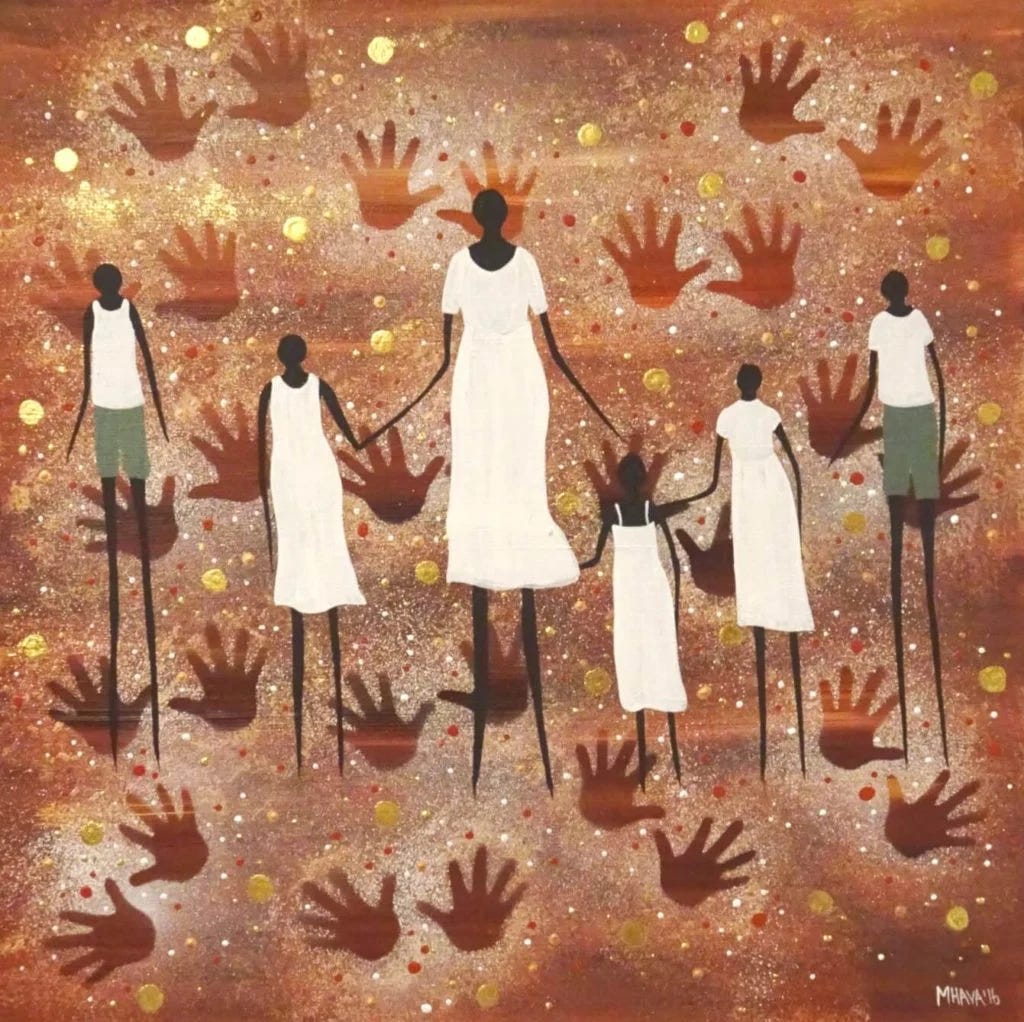
All of scripture for all of us
Do you ever wonder what our go-to metaphors for God would be if there were more females writing at the time the scriptures were penned? Psalm 22:9-10 likens God to a midwife yet, how often do we use that metaphor while praying or talking to someone about our faith? If more women authored scripture, would there be more word-pictures and symbols in the Bible that women find easier to connect with? What might shift for us—both women and men—if that had been the case?
I suspect there is more feminine imagery present in scripture than most of us realize. Not because scripture is divided into passages for men with male-coded metaphors and passages for women with female-coded metaphors; all of scripture is for all of us. The question is whether we are willing to let the fulness of the Bible shape our imagination and inform our view of God, even if it pokes or pulls at our existing paradigm.
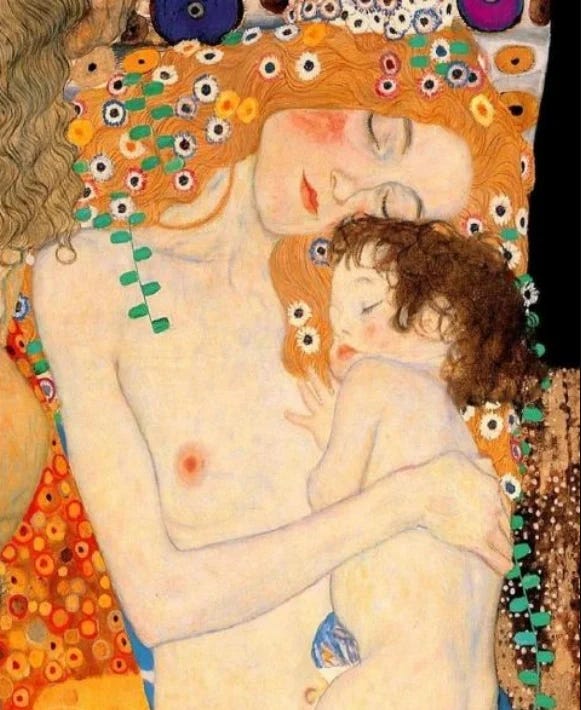
God as Father, God as Mother
For a moment, make this personal. Think of your own father. You may know him well, barely know him, or not know him at all. Whatever the case, try to describe him in three words.
Words may come to mind such as: wise, strong, stern, distant, angry, funny, absent, playful, faithful, dependable, demanding, affectionate, authoritarian, generous, passive, clever, resourceful, cold, loving, negligent, loyal, short-tempered, determined, or humble.
Now do the same for your mother.
Descriptive words such as: nurturer, teacher, comforter, smart, capable, witty, critical, controlling, distant, overbearing, demanding, creative, resourceful, tender, wise, stressed, overwhelmed, joyful, distracted, mean, strong, encouraging, harsh, kind, or thoughtful.
Whether we’re aware of it or not, the ideas we hold about our parents impact how we respond to parental metaphors for God. Sitting with these thoughts can feel difficult or even cause the metaphors to crumble.
This is why we need many different metaphors to help us to engage with God. The metaphors we adopt are onramps for connection—they can help or hinder our attachment with God and our ability to experience spiritual growth. Using parental imagery for God is always an invitation, not an obligation, and when we choose to accept the invitation to examine our metaphors—the prickly ones and the easier ones—we can be more cognizant of our biases and open to discover new pathways of relational connection.
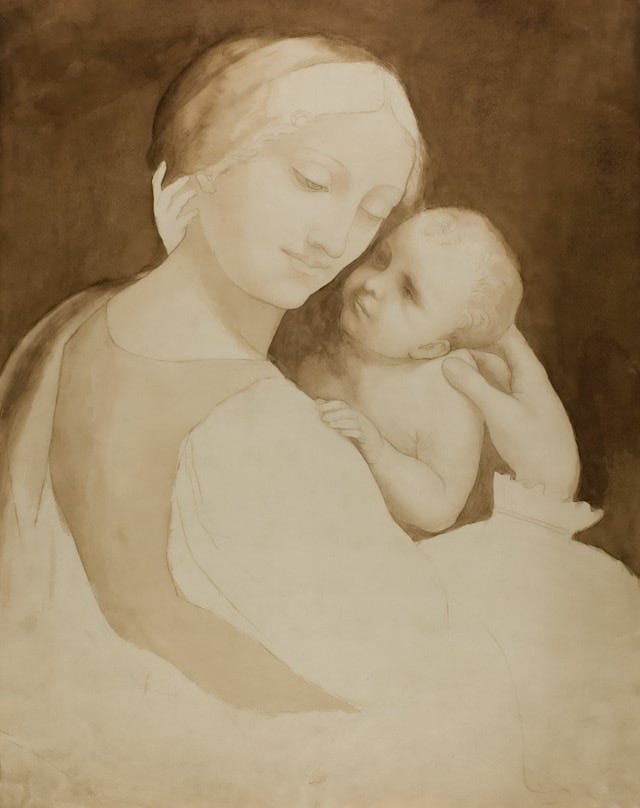
Feminine language for God
Feminine language for God isn’t new. Throughout history church mothers and fathers have used maternal imagery to describe God’s character and ways. Unfortunately we’ve lost the prevalence of feminine language in the last few centuries. While it’s no longer used regularly in our modern teaching, it remains deeply rooted in scripture and early Christian writings.
In her 14th century writings, Revelations of Divine Love, Julian of Norwich wrote: “For God is so good that he will be our Mother and our Father; and our Mother, the same as the Father, has always been our Saviour, and the same as the Father will be the judge of our souls.”8
Scripture itself contains abundant maternal imagery. In Job 38, it says, “Does the rain have a father who fathers the drops of dew? From whose womb comes the ice who gives birth to the rest of the heavens?” In a single passage we see both fathering and mothering imagery—what a beautiful picture.
What follows is not an exhaustive list, but a thread to help illustrate the presence of maternal imagery for God which is woven all throughout the biblical narrative.
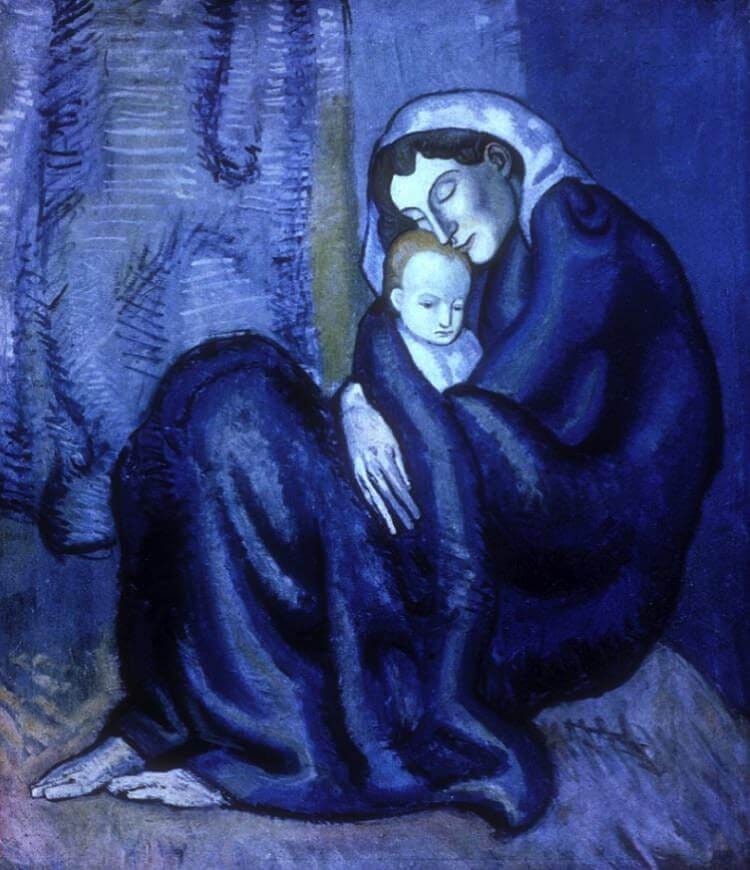
A mother who creates and provides
“Because of your father’s God who helps you, because of the Almighty who blesses you with blessings of the skies above, blessings of the deep springs below, blessings of the breast and womb.” Genesis 49:25
Here Jacob speaks to his son, Joseph, with a blessing from God using the word El Shaddai, often translated as “Almighty” but also understood to mean “The Breasted One” (sometimes translated as “double breasted”).
In a deeply patriarchal culture the patriarch Jacob invokes maternal imagery for God as a form of blessing. Let that sink in for a moment and consider:
What might this symbolize? Fruitfulness, growth, life, abundance—beautiful gifts one could associate with the mother-heart of God.
When most of us read/hear the term “Almighty” (in this scripture or in others) it conjures images of power, which begs the question: Does power cause you think about force, violence, lording over, reigning above, or conquering enemies? Or do you think about power as creative energy, sustenance, love, generosity, provision, abundance? We must ask ourselves what we believe power to be for—to dominate or to serve? (See why our metaphors matter?)
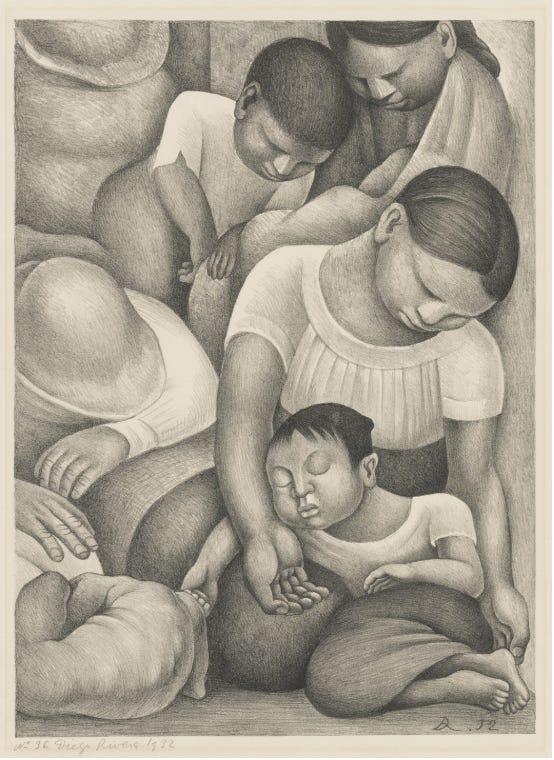
From the earliest stories of God’s relationship with humanity as recorded in the Genesis account, God is depicted as the one who gives life and nourishes—God the Almighty, the Breasted One. God is a mother who gives life and provides. I don’t think it’s a coincidence to see a name for God which invokes this type of primal and foundational relationship right there in the Bible’s origin story for humanity.
Later (in Exodus) at Moses’ encounter at the burning bush, another name is revealed: I Am Who I Am. God is about to be revealed as Rescuer, Savior, and Liberator while delivering God’s people out of slavery—a very different picture to God giving blessings of the ‘breast and womb.’
All of these are true: God liberates and nurtures. God rescues and births life. God saves and provides. God delivers and creates.
A mother who nourishes and remembers
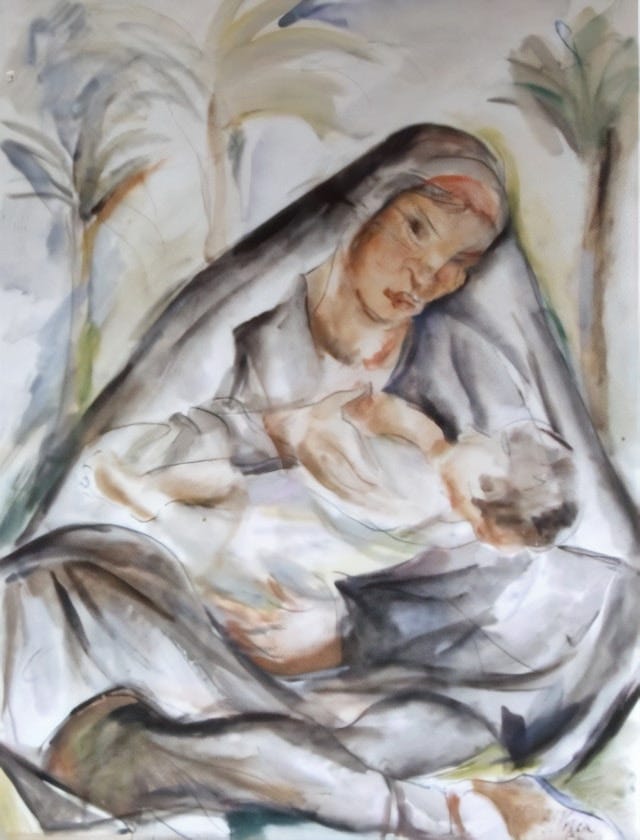
Isaiah 49:15 asks, “Can a mother forget the baby at her breast and have no compassion on the child she has born? Even that mother, though she may forget, I will not forget you.”
God is a mother who nourishes and remembers.
A mother who is the source of life
Deuteronomy 32:18 says, “You deserted the rock who fathered you, you forgot the God who gave you birth.”
God is a mother who is the source of life.
A mother who gathers and shelters
In Matthew 23:37 Jesus laments over Jerusalem: “Jerusalem, Jerusalem, you who killed the prophets and stone those who sent you. How often have I longed to gather your children together as a hen gathers her chicks under her wings, and you were not willing.”
God is a mother who gathers and shelters.
A mother who protects and carries
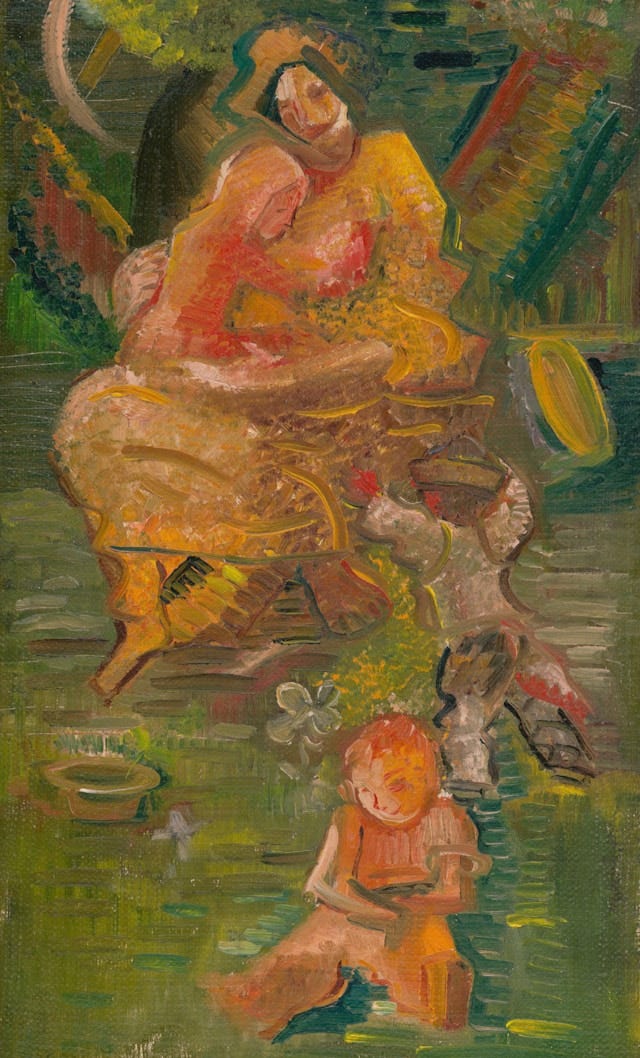
“Like an eagle that stirs up its nest and hovers over its young, that spreads its wings to catch them and carries them aloft. The Lord alone led him, no foreign God was with him” (Deuteronomy 32:11-12).
God is a mother who protects and carries us.
A mother filled with strength and power
Isaiah 42:14-16 says, “For a long time, I’ve kept silent, I’ve been quiet, I’ve held myself back. But now like a woman in childbirth, I cry out, I gasp, I pant, I lay waste the mountains and hills and dry up all their vegetation. I turn rivers into islands and dry up the pools.”
This is not gentle imagery, but forceful language pulled from the experience of childbirth. It’s as if Isaiah is tapping into the strength, fierceness, focus, grit, and resilience of a woman filled with roaring love that overcomes her fear and pain.
God is a mother filled with strength and power.
A mother who comforts
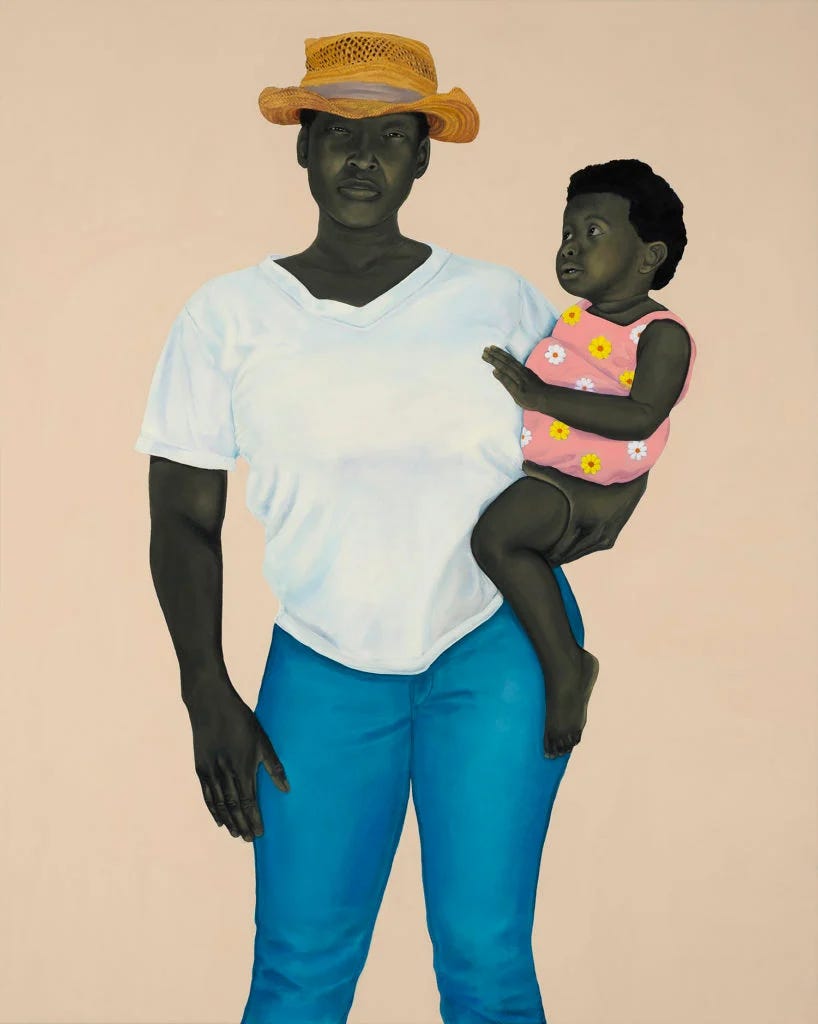
“As a mother comforts her child, so I will comfort you, you will be comforted over Jerusalem” (Isaiah 63:13).
God is a mother who emanates tender care.
A mother who bends low to embrace and heal
Hosea 11:3-4 says, “It was I who taught Ephraim to walk taking them by the arms, but they did not realize it was I who healed them. I led them with cords of human kindness with ties of love. To them I was like one who lifts a little child to the cheek, and I bent down to feed them.”
God bends down—a posture of humility and care—so we can be lifted up find healing in God’s presence.
God is a mother who bends low to embrace and heal.
A mother who gives the breath of life
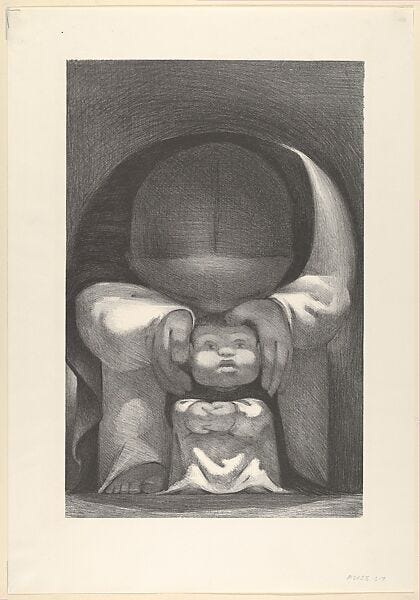
“This is what the Lord God says, the Creator of the heavens, who stretches them out, who spreads out all the earth with all that springs from it, who gives breath to his people and those who walk on it” (Isaiah 42:5).
God is a mother who gives us the very breath of life.
A mother who steadies and calms
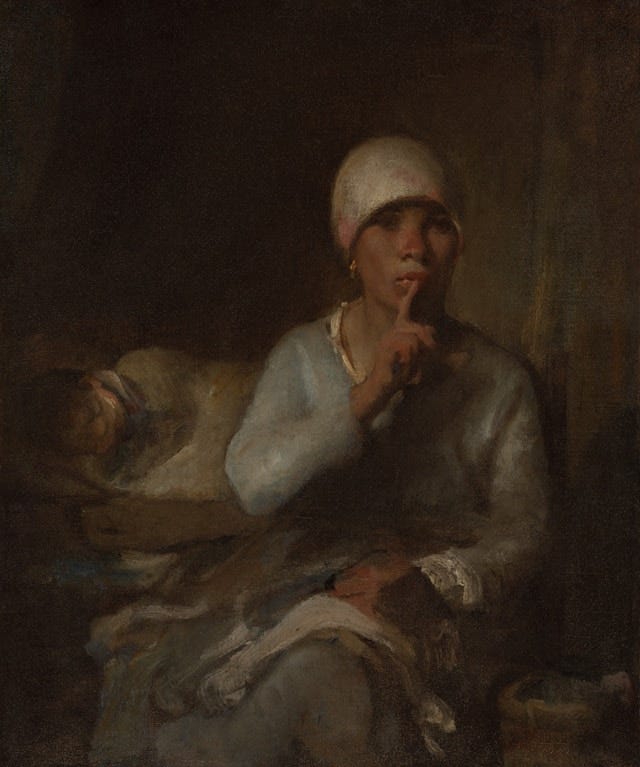
Even the ‘heroes’ of scripture acknowledge God as mother. “My heart is not proud, Lord, my eyes are not haughty. I do not concern myself with great matters, or things too wonderful for me, but I have calmed and quieted myself,” says King David in Psalm 131. “I am like a weaned child with its mother, like a weaned child I am content.”
How astonishing! King David—for all his problematic behavior and abuses of power—humbled himself by identifying as a weaned toddler on his mother’s lap. The implication here is that it’s no longer about seeking God’s provision, sustenance, and survival but rather proximity, presence, and care.
God is a mother whose presence steadies and calms us.
A scriptural through line
This imagery is used from the beginning to the end of scripture in verse after verse after verse, only some of which I’ve listed here. It can be found from Genesis through the historical literature and wisdom literature, through the poetry and the prophets, and then even through the gospel accounts and letters of the New Testament (see also 1 Thessalonians 2:7-8; Galatians 4:19).
Childbirth as a metaphor
Mothering is not only tender; it is fierce, creative, and powerful. Childbirth itself offers a profound metaphor for how God brings life into being—through pain, perseverance, and sacrificial love.
My own experiences of childbirth—an emergency cesarean, a prolonged labor resulting in agonizing pain and a difficult delivery, a newborn who came out blue for lack of oxygen, and even multiple miscarriages—have each shown me something of how God mothers us.
When our youngest was born not breathing due to the cord wrapped tightly around his neck as his shoulder became caught during birth, the midwife placed him straight on my chest, yelled at Ryan to hit the emergency call button, and shouted orders at me to rub him as hard and as fast as I could (while she did the same). As the resuscitation crew rushed in Micah gasped and began to wail the beautiful sounds of life.
Blissed out on oxytocin and adrenaline in my post-birth euphoria, I missed the terror of it all, but Ryan and the midwife did not. They knew how devastating the outcome could have been. To this day Ryan shudders when he describes the glint of fear he caught in the midwife’s eye while I was laughing and rubbing Micah with pure joy (and relief after that last push).
Similarly, we sometimes find ourselves breathless and on the verge of disaster and assume we need all the interventions or expertise in the world, but what we need most is the miraculous touch of our Mother God’s hand.
Like my children, we arrive into God’s care imperfectly: upside down, backwards, breathless, stubborn, fragile, vulnerable, dependent, flawed-and-yet-perfect. Yet God adapts to our needs, perseveres with us, loves us without fail, calls us beautiful, and breathes life into us again and again. God is both midwife and mother—simultaneously working to bring us to life, emanating sacrificial love, always ready to hold us near, and brimming with boundless joy on arrival.
God in us and us in God
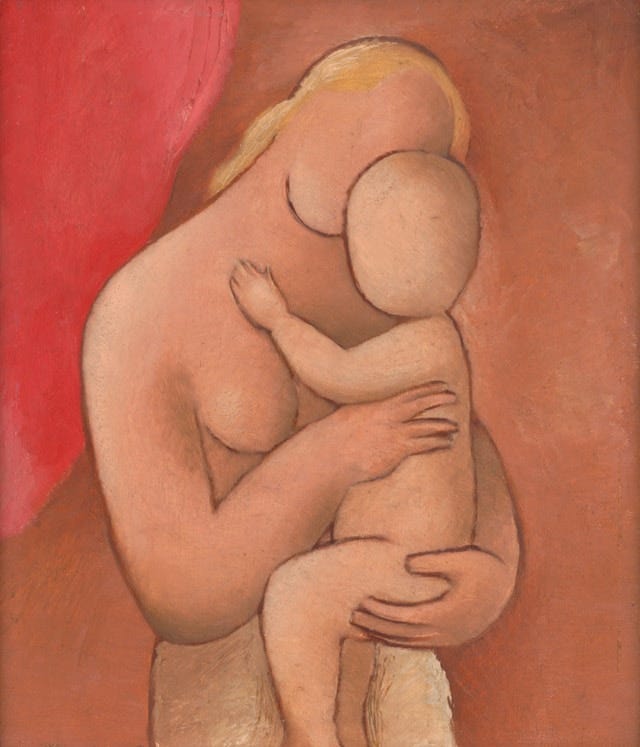
And finally, the metaphor of God as mother reminds us of our intimate connection to God. We understand that a child carries their mother’s DNA, but science also reveals that a mother carries traces of her baby’s DNA for years after childbirth in a phenomenon called fetal-maternal microchimerism. Miraculously, cells from the baby cross the placenta and enter the mother’s bloodstream, not just the other way around.9
Researchers are still studying the potential clinical applications and functional consequences of this deep biological connection, but I like to think of it in simple terms: I am in my children and my children are in me. What an absolute wonder!
How much more marvelous is our deep connection with God? We are created in the image of God and also found in God. We are made of the ‘stuff’ of God, but also the Body of Christ is made of us. When we look at a child we can sometimes see glimpses of their parents. Similarly, God looks at us and sees Jesus. (In Jesus we live and move and have our being—Acts 17:28.) We are in God and God is in us.
Immanent and transcendent
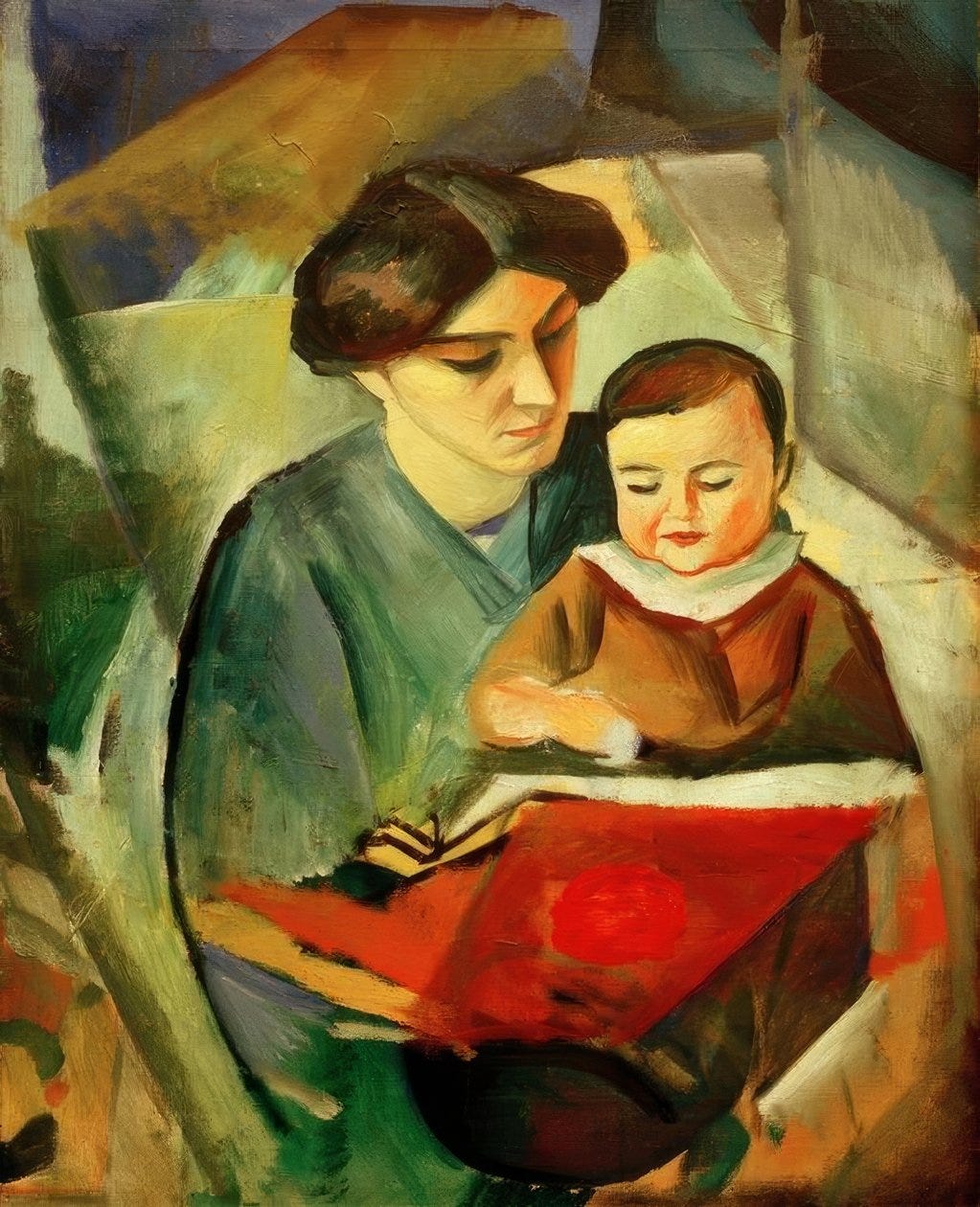
Saint Augustine wrote in the Confessions that the Word became flesh so that God's wisdom “might become for us the milk adapted to our infancy” (Confessions 7.18.24)10 —an image theologians have long expanded upon.
Like a mother who transforms a rich lasagna or a spicy green curry into sustenance her infant can receive, God gave us Jesus so we might grasp divine love in a form we can receive. In Jesus, God digested transcendence into substance we could see, touch, hear, and understand. Immanuel, God with us—wisdom and power beyond comprehension clothed in humanity so we can take it all in. Heavenly food made into milk; transcendence made immanence.
This is the paradox of Jesus: divine and human, fierce and tender, strong and humble, transcendent and immanent—the best representation of God we could ever have (see: Hebrews 1:3; John 14:9; Colossians 1:15, 2:9).
Choosing your metaphors
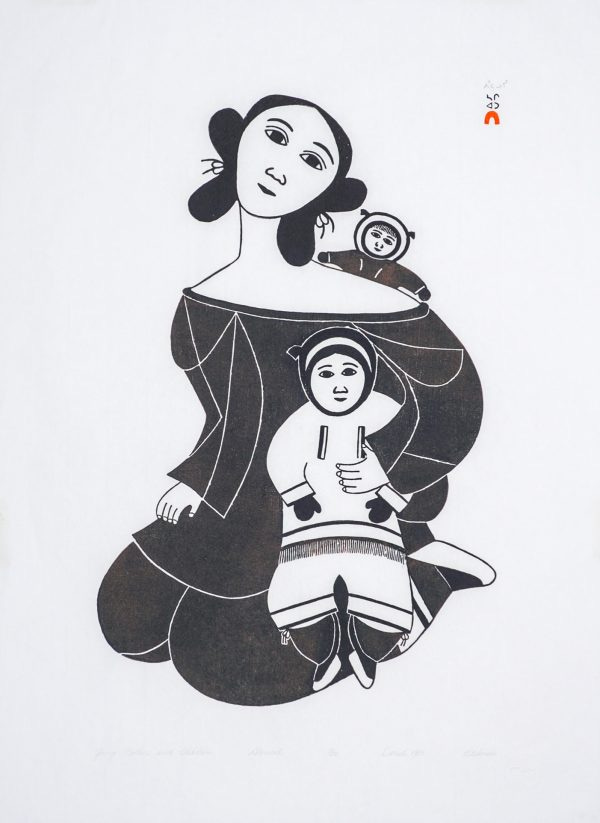
Returning to the words you chose earlier to describe your parents, how have they shaped the way you experience God? Or the metaphors passed down to you through the repetition of hymns and sermons or your particular church tradition?
Are you willing to suspend them in order to gain fresh perspective on how God may want to relate to you—mother you—in this season of life? It can feel awkward to speak of God as Mother if this type of language is unfamiliar, but if we allow our metaphors to stretch beyond the limits of what we’ve previously known, there are layers of God’s kindness to experience: Always more of God’s compassion to discover. Always more of Jesus to behold. Always more Love to be held by.
Do your ‘old’ metaphors for God still serve you? Only you can answer this. You may not need to replace them, perhaps simply expand them. God does not change but we do (and we must). And sometimes our language must change to help us stay connected.
Give yourself permission to do this. In doing so, may you find new kindness buried there too.
A CLOSING PRAYER FOR YOU
God Our Mother,
Give us grace to shed old metaphors for you that are no longer helping us maintain connection with you. Help us to identify tired cliches or religious or cultural tropes we’ve held onto out of fear or obligation, and to instead see old truths about you in new ways. Help us to lean into the timeless wisdom of scripture and the many metaphors it contains. Help us to glean from the insights of church mothers and fathers even as we examine our own present-day experiences with you and ask for you to meet us in a fresh way. Give us eyes to see you are fierce in your love, tender in your care, and powerful in your provision as you nurture and teach us in our current season of liminality, change, or transition. Give us ears to hear you calling, inviting, reassuring, and reminding us of your unending love. May we not forget that you are above all others and mighty in your ways, and also bring us to your breast to find nourishment, comfort, and tender, affectionate care. Be with us, God, in our regular, everyday moments of trial and triumph, weariness and strength, and keep us within your steady embrace.
Amen.
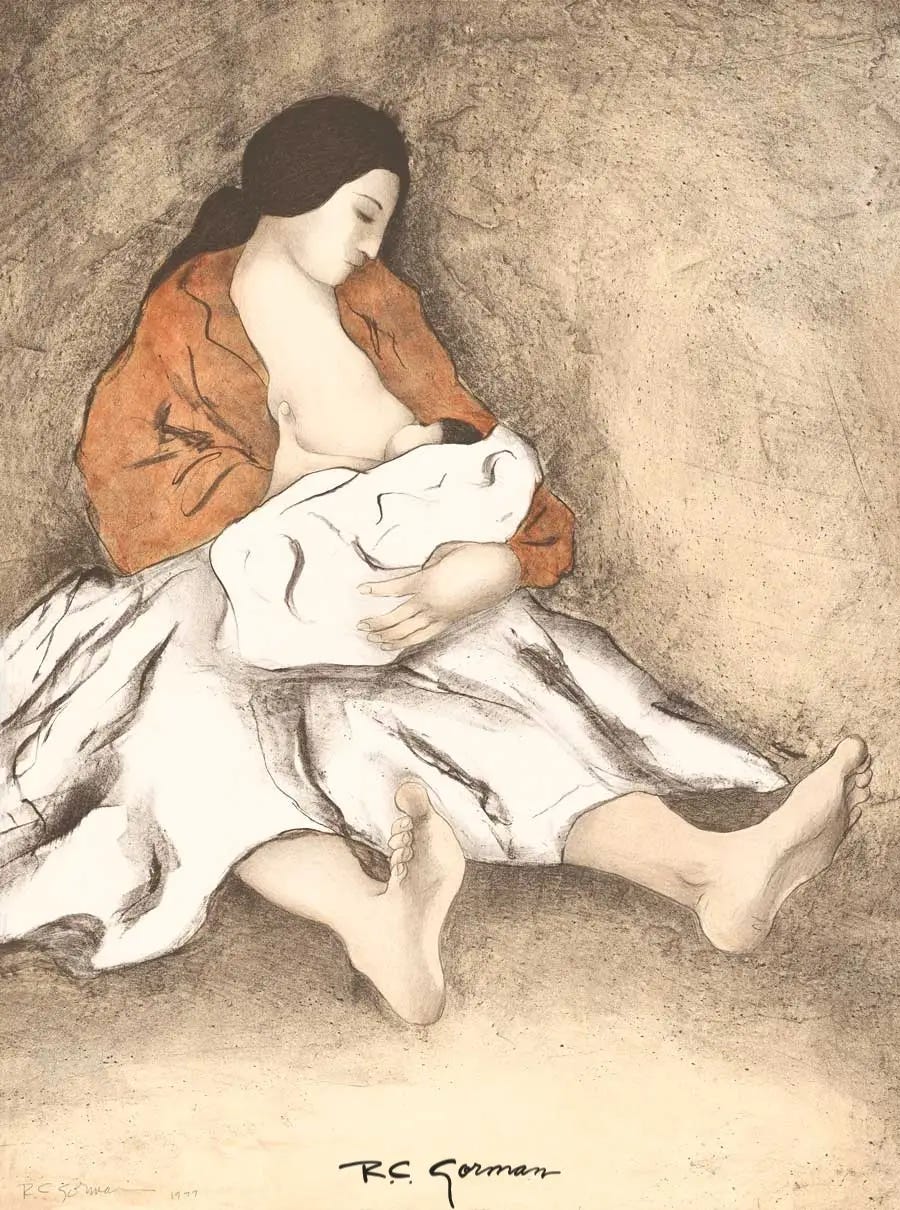
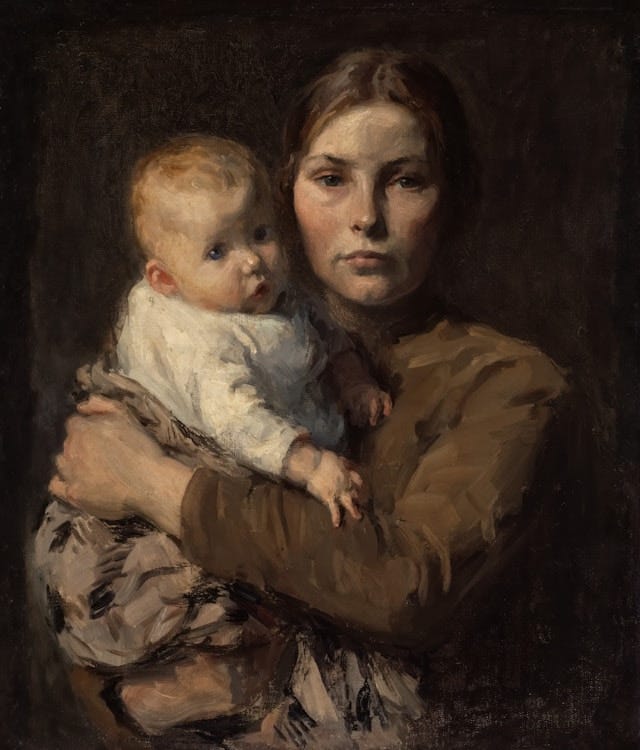
Editor’s note: This piece is based on a sermon I preached in May 2023 (and draws from a blog series I wrote and hosted in 2014 called the “Mother-heart of God”). I was originally going to rework this sermon into a chapter for Tethered to Hope, but decided it was better to a stand-alone piece for now (and perhaps as part of a future project). Please let me know in the comments how it resonates. Also—which one is your favorite artwork? I love them all. . .

ADRIEL BOOKER is the author of Tethered to Hope and Grace Like Scarlett and has appeared in outlets such as Christianity Today and ABC Religion & Ethics. She writes the popular Substack The Foundry and believes the best things in life happen while gathered around the table. Adriel lives with her family among the gum trees and sea breezes of a small town on Ngarrindjeri Country in South Australia, where they own and operate a café, vintage shop, and co-working studio for creatives.
Tethered to Hope: The Quiet Kindness of God in Crisis, Change, and the Spaces In-Between
Early access to read Tethered to Hope
Also? I’m about to open up the early reader launch team for Tethered to Hope. If you’d like early access to the book in a small, private group with me you can find the details for how to join right here. (Psst, it will include a free copy of the audio book to accompany your digital and/or print copy! 🙌)
Aída Besançon Spencer, “God as a Symbolizing God: A Symbolic Hermeneutic,” Journal of the Evangelical Theological Society 24, no. 4 (Dec. 1981): 323–25 via Does God Have Gender? CBE International https://www.cbeinternational.org/resource/does-god-have-gender/ Accessed August 29, 2024.
Isaiah 45:10, 50:1, 54:5–8, 37:29, 61:11, 5:1–7, 10:15, 33–34; 50:3, 28:17, 40:12, 15; 42:13–15, 29:16, 14:23, 48:10, 4:4, 63:2–6, 2:4, 30:26.
Isaiah 8:14, 10:17, 17:13, 25:4, 27:8, 29:6, 30:27–30, 33:14, 40:24, 60:1.
Isaiah 31:4–5, 40:22.
Besançon Spencer.
“God, Metaphor, and Gender,” Discovering Biblical Equality: Complementarity without Hierarchy, ed. Ronald W. Pierce and Rebecca Merrill Groothuis (Downers Grove, Ill.: IVP, 2005), 300.
Besançon Spencer.
Revelations of Divine Love Recorded by Julian, Anchoress at Norwich; Translator: Grace Warrack. September 2, 2016 [EBook #52958] https://www.gutenberg.org/files/52958/52958-h/52958-h.htm Accessed August 31, 2024.
Forever Connected: The Lifelong Biological Consequences of Fetomaternal and Maternofetal Microchimerism. Diana W Bianchi, Kiarash Khosrotehrani, Sing Sing Way, Tippi C MacKenzie, Ingeborg Bajema, Keelin O’Donoghue. Clinical Chemistry, Volume 67, Issue 2, February 2021, Pages 351–362, https://doi.org/10.1093/clinchem/hvaa304. Published December 17, 2020. Accessed August 1, 2024
Augustine of Hippo. Confessions. Translated by Maria Boulding. New York: New City Press, 1997. 7.18.24.
This was a beautifully thoughtful reflection. I really appreciated the way you explored how metaphors shape our understanding of God and how expanding our language can deepen our relationship with Him. The reminder that Scripture holds a rich diversity of imagery for God was especially meaningful. Thank you for such a reflective and thought-provoking piece.
This is so incredibly well written and so full of thoughts that I will be going back through it to consider different aspects of what you said for a long time. I will add that, I am so tired of men who speak of God like he is their macho buddy, Chad. This is another reason I have switched to a new version of the Bible, the NRSVEU. Thank you.